The niche educator
Explain one history, science, or philosophy idea with narration, captions, and supporting visuals.
A concise teaching series that earns saves from viewers who want to revisit the point.
faceless reels examples tiktokInstagram ideas
Faceless reels examples for instagram work best when they match the audience, the hook, and the way people already browse short video. Use these patterns to plan useful posts without appearing on camera.
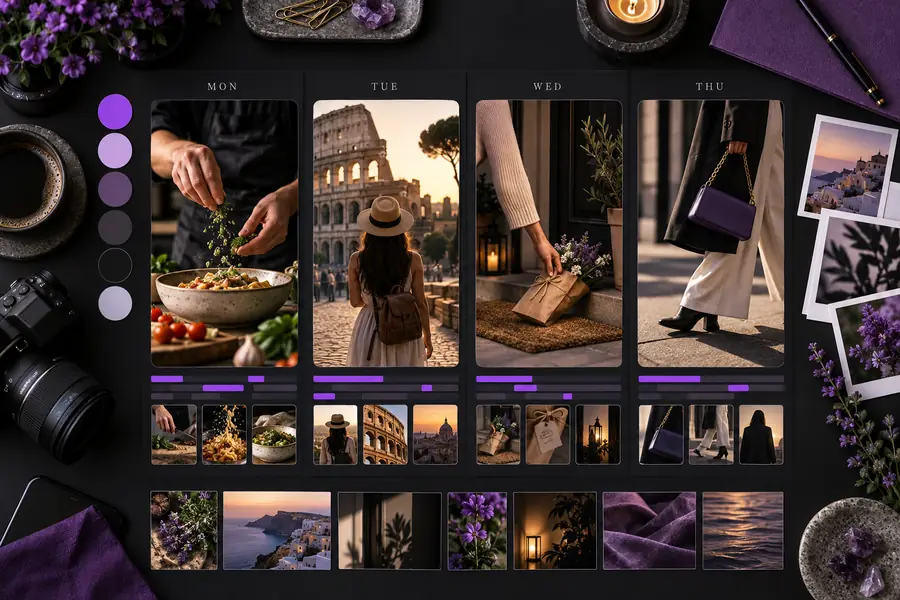
Format blueprint
A strong Instagram reel fits into a familiar content loop: discover a hook, watch a quick sequence, understand the takeaway, and decide what to do next.
Use-case patterns
Choose a format based on what your audience already saves, shares, or watches to the end. Each scenario below can become a repeatable series rather than a one-off post.
Explain one history, science, or philosophy idea with narration, captions, and supporting visuals.
A concise teaching series that earns saves from viewers who want to revisit the point.
faceless reels examples tiktokTurn a strange event, myth, or real anecdote into a hook-led sequence with visual scene changes.
A curiosity loop that gives viewers a reason to stay through the final reveal.
do faceless reels make moneyShow a problem, demonstrate a solution, and summarize the benefit using screen captures or stock-style visuals.
A clearer product story that can support awareness without a talking-head presentation.
faceless reels examples tiktokPair a short lesson or reminder with atmospheric footage, readable captions, and a direct closing prompt.
A recognizable daily format that is easy to batch, review, and publish consistently.
do faceless reels make moneyContent transformation
The difference is usually not more effects. It is a tighter promise, clearer pacing, and visuals that support each line instead of competing with it.


A usable example moves from a vague subject to one specific viewer promise: “Three details in this myth most retellings leave out.”
Format evolution
Faceless Instagram content has moved from simple quote cards toward short, edited stories that combine narration, captions, visual movement, and a deliberate ending.
Creators used text-led posts and simple background footage to publish without appearing on camera.
Narration gave educational and story-based accounts a stronger way to carry context through short video.
Word timing, emphasis, and scene changes started doing more of the work once viewers watched with sound off.
Creators began organizing posts into repeatable themes, recognizable openings, and recurring visual systems.
The useful workflow is to test several hooks and openings while keeping the core subject and audience promise stable.
Related reading
Use the adjacent guides when your Instagram example needs a platform comparison, a monetization angle, or a different production workflow.
Choose your route
The best format depends on whether the goal is reach, trust, or a repeatable publishing habit. Start with the viewer action you want after the final frame.
1
Use a hook, two or three escalating details, and a final reveal or question.
Stories create forward motion and suit myths, history, mysteries, and personal lessons.
2
Use a problem statement, supporting footage or screen capture, and a concise takeaway.
Explainers make unfamiliar ideas easier to understand without requiring the creator on screen.
3
Keep the message short, use one visual mood, and end with a prompt worth saving or sharing.
This route is efficient for daily publishing when consistency matters more than narrative complexity.
Planning calculator
Estimate the review load before you batch a month of Instagram posts. Move the slider to see how a repeatable faceless workflow can scale.
Common questions
These answers focus on choosing and adapting faceless examples for an Instagram audience.
It has one clear viewer promise, a strong opening line, readable captions, and visuals that reinforce the narration. The subject can be educational, entertaining, motivational, or product-focused, but the reel should not try to explain everything at once.
Yes. A business account can use screen recordings, product demonstrations, narrated tips, customer questions, or visual explainers without showing the owner’s face. The content still needs a specific audience and a useful reason to keep watching.
Topics with a natural sequence are usually easiest: myths, unusual history, practical tutorials, list-based lessons, routines, and short product explanations. Each topic gives you a clear way to structure the hook, supporting points, and close.
Use the shortest length that delivers the idea clearly. A simple reminder may need only a few seconds, while a story or explanation needs enough time for context and payoff; remove pauses and repeated points before adding more footage.
No, but you do need consistency and evidence. A recognizable narration style, accurate information, clear captions, recurring visual choices, and honest calls to action can make a faceless account feel dependable over time.